
Targeted Ant Treatment in Bradenton & Sarasota
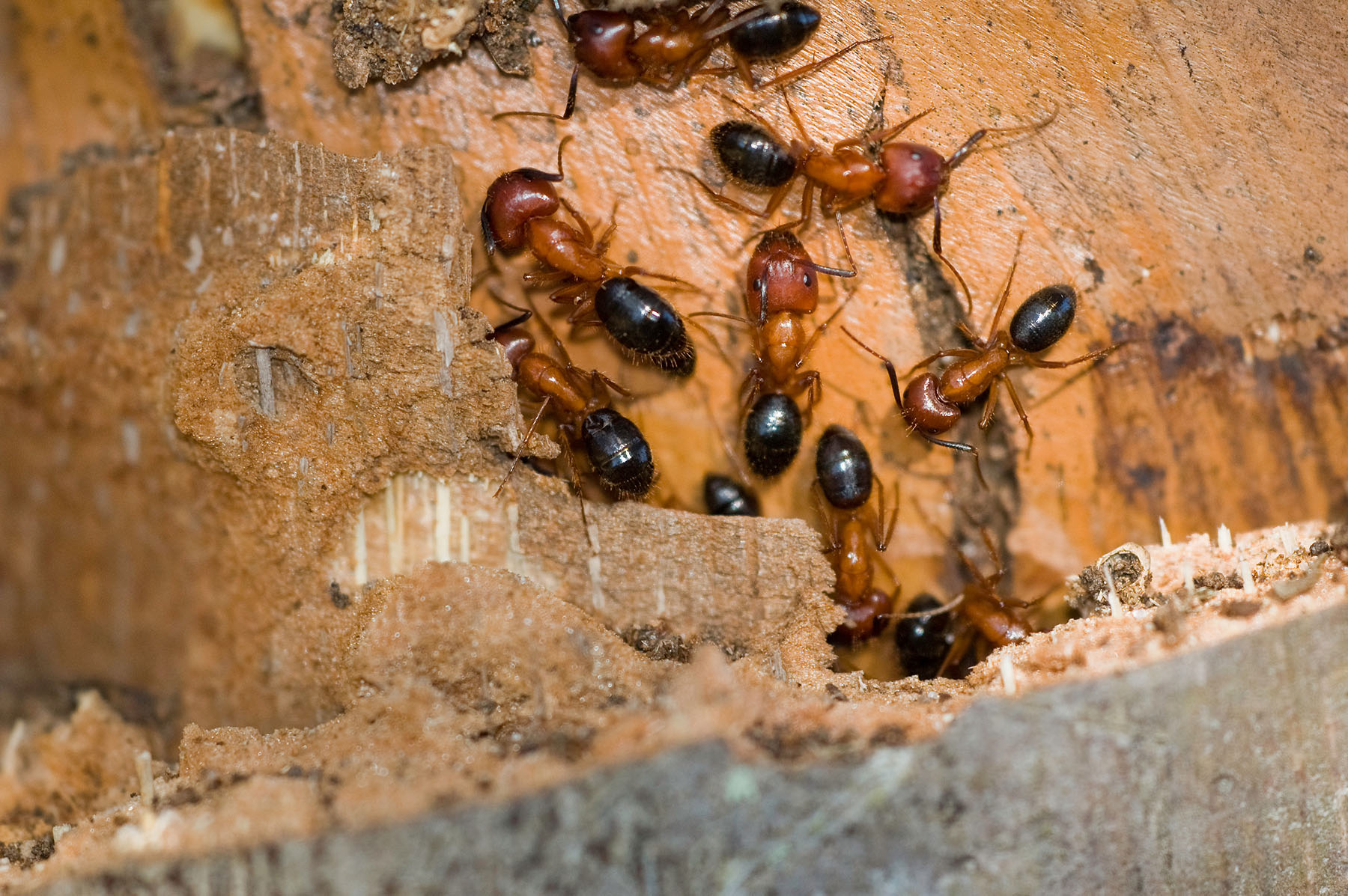
Table of Contents
Ant Removal in Bradenton
There are over a dozen types of ant varieties encountered in the Gulf region of Florida. In this article, we’ll explore 7 of the most common ants found in Bradenton, Florida homes. Pest Free LLC identifies and treats dozens of varieties of ants, as each variety takes a different and specific approach to control.
Got Ants Falling From the Ceiling?
Ask ten Bradenton homeowners what kind of ant is in their kitchen, driveway, or ceiling, and most will say “the little fast ones.” That imprecise answer is exactly why so many store-bought general ant treatments fail in Bradenton homes.
Targeted Ant Treatments from Pest Free LLC
Pest Free LLC has the expertise to provide targeted treatments to combat and maintain your home so that it is ant-free. Such treatments include summer gel and summer sprays—while some require a hybrid program with a little bit of everything. Pest Free LLC has the knowledge to identify each ant variety and treat accordingly.
Manatee and Sarasota Counties sit in a subtropical sweet spot where dozens of native and invasive ant species thrive year-round. Some sting. Some damage wood. Some split into new colonies the moment they sense a spray. Treat the wrong ant the wrong way, and you can turn one nest into five.
Pest Free LLC has been solving Florida pest problems since 1981. As a family-owned company, Pest Free’s owner and technicians have spent decades learning to tell a ghost ant from a Pharaoh ant at a glance, and to match each species with a precise, targeted treatment rather than a blanket spray.
This guide walks through the seven ant types we encounter most often across Bradenton, Sarasota, Anna Maria Island and Longboat Key; how to recognize them; and how we treat each one.
Why Ant Identification Comes Before Treatment
Every ant species has its own diet, nesting habits and colony structure, and those details decide which treatment will work. A product that wipes out one species can make another worse.
Three differences matter most:
Colony structure. Many Florida ants, such as ghost, Pharaoh and white-footed ants, have many queens and reproduce by “budding,” where a queen and workers walk off to start a new nest. Repellent sprays trigger this, scattering the problem through walls and cabinets.
Diet. Some ants crave sugars, others want protein or grease, and many switch with the seasons. A bait only works if the ants actually eat it and carry it home to the queens.
Nest location. A fire ant mound in the lawn, carpenter ants in a damp soffit and ghost ants inside a potted plant each call for a different delivery method.
Types of Ant Treatments
That is why Pest Free LLC treatments generally fall into three categories:
1. Gel and Liquid Baits
2. Targeted Sprays and Granules
3. Hybrid Programs
| Approach | What It Is | Best Suited For |
|---|---|---|
| Gel and Liquid Baits | Slow-acting, non-repellent food baits that workers share with the whole colony, including queens | Indoor sugar and protein feeders: ghost, Pharaoh, white-footed ants |
| Targeted Sprays and Granules | Non-repellent perimeter treatments, granular broadcast baits, and direct mound or void applications | Outdoor nesters: fire ants, bigheaded ants, carpenter ant galleries |
| Hybrid Programs | A combination of baits, non-repellent barriers, and habitat correction, adjusted over several visits | Super-colonies and mixed infestations: Caribbean crazy ants, white-footed ants, multi-species properties |
The 7 Types of Ant Varieties Found in Bradenton
1. Red imported fire ants (Solenopsis invicta)
How to spot them: Reddish-brown workers in mixed sizes, building fluffy, dome-shaped dirt mounds in sunny lawns, along sidewalks and at the base of palms. A fire ant mound has no central opening; workers pour out of the soil the moment it is disturbed. Each sting burns, then forms a small white pustule within a day.
Why they matter here: Bradenton’s irrigated St. Augustine lawns, playgrounds and pool decks are prime fire ant territory. After a heavy summer rain, colonies often relocate overnight, which is why new mounds seem to appear out of nowhere.
How Pest Free LLC treats them: Fire ants are one of the clearest cases for a two-step program. First, a slow-acting granular bait is broadcast across the lawn, applied when the turf is dry and the ants are actively foraging, so workers carry it back to the queen. Second, individual mounds near walkways, pool areas or play zones receive a targeted mound treatment for faster knockdown. Research from university extension programs shows broadcast baiting alone typically reduces fire ant colonies by 80 to 90 percent (NC State Extension). Kicking or flooding a mound only sends the colony a few feet away to rebuild.
2. Florida carpenter ants (Camponotus floridanus)
How to spot them: Among the largest ants in Florida, often called “bull ants.” Workers have a rusty-orange head and thorax with a shiny black abdomen, and they forage mostly at night. Winged swarmers appearing indoors are a common first sign.
Setting the record straight: Florida carpenter ants are often blamed for wood damage they did not cause. According to UF/IFAS Extension, unlike the black carpenter ant of the Panhandle, Florida carpenter ants nest in existing voids or excavate only soft material such as rotten wood and foam insulation. In other words, a carpenter ant nest inside your home usually points to a moisture or wood-rot problem worth investigating, and occasionally to old termite damage.
How Pest Free LLC treats them: The key is locating the main nest and its satellite nests, which our technicians often trace by following nighttime foraging trails from palms, oaks and landscape timbers to entry points along wiring and plumbing. Treatment is a hybrid: non-repellent dust or foam applied directly into nesting voids, carpenter-ant-specific baits along trails, and a non-repellent exterior perimeter. We also recommend trimming branches that touch the roofline, which ants use as bridges.
3. Ghost ants (Tapinoma melanocephalum)
How to spot them: Tiny workers, about 1.3 to 1.5 mm long, with a dark head and thorax and a pale, almost see-through abdomen. Against a white countertop they seem to vanish, which is how they earned the name. Crush one and you may notice a faint rancid-coconut smell.
Why they matter here: Ghost ants were considered only an occasional nuisance in Florida until the late 1980s; by the mid-1990s, UF/IFAS reported them common across central and south Florida and elevated to major pest status. They nest almost anywhere: potted plants, wall voids, behind baseboards, under palm boots. They love bathrooms and kitchens because they need moisture and sweets.
How Pest Free LLC treats them: Ghost ants are multi-queen budding ants, so repellent sprays are the worst possible choice; they simply scatter the colony into more nests. Our approach centers on sweet, slow-acting gel baits placed directly on active trails and at entry points, so workers feed and share the bait throughout the colony. Outside, we pair this with a non-repellent perimeter treatment and inspection of potted plants and mulch beds. We also point out moisture sources, such as AC condensate lines and leaky fixtures, because reducing moisture is one of the most effective long-term controls.
4. Bigheaded ants (Pheidole megacephala)
How to spot them: Small reddish-brown to dark brown ants with two worker sizes. The “majors” have a strikingly oversized, heart-shaped head used to crack seeds and insects. The more telling clue is the dirt: little piles of loose sandy soil along driveway seams, paver edges, pool decks and baseboards. They also build mud foraging tubes up palm trunks and foundation walls, which are sometimes mistaken for termite tubes.
Why they matter here: Bigheaded ants are listed among the world’s 100 worst invasive species and have become one of the most common nuisance ants in coastal Florida. Their colonies form vast, interconnected networks, which is why one yard treated alone often re-infests from the neighbor’s.
How Pest Free LLC treats them: Because bigheaded ants favor protein and grease, we use protein- or oil-based granular baits broadcast over turf and landscape beds, combined with targeted non-repellent applications along slab edges and expansion joints. Field trials published in Florida Entomologist compared both baits and residual products against this ant and found several provided significant reductions. On properties where neighbors share the same super-colony, recurring service is what keeps the population down.
5. White-footed ants (Technomyrmex difficilis)
How to spot them: Small black to brownish-black ants, roughly 2.5 to 3 mm long, with pale yellowish-white “socks” on the lower legs. Expect long, steady trails along rooflines, window frames, lanai screens and kitchen counters, often leading up from palms and dense landscaping.
Why they matter here: They do not bite, sting or damage structures, according to UF Entomology, but the sheer numbers make them one of the most frustrating ants in coastal homes. Colonies can span many nests and run into the millions. Even more unusual, a large share of the colony consists of reproductive females, so eliminating a single queen does not end the infestation.
How Pest Free LLC treats them: White-footed ants are a textbook case for a hybrid program. Foraging workers do not pass food mouth-to-mouth as freely as other ants; instead, they share it by laying non-viable “trophic” eggs that nestmates eat. That means baits must be sweet, highly attractive and slow-acting so workers survive long enough to spread them. Fast-kill sprays fail here, a point UF researchers flagged early in the ant’s spread through Central Florida (UF/IFAS News). Our program combines liquid and gel baits indoors and out, non-repellent exterior applications, and recommendations to trim vegetation touching the house. Expect gradual improvement over several visits rather than overnight results.
6. Pharaoh ants (Monomorium pharaonis)
How to spot them: Tiny, about 2 mm, light yellow to reddish-yellow with a slightly darker abdomen. Unlike ghost ants, the body is uniformly colored rather than two-toned. They trail along baseboards, cabinet hinges, electrical outlets and plumbing lines, almost always indoors.
Why they matter here: Pharaoh ants nest in warm, hidden voids: inside walls, behind appliances, between stacked linens. They are notorious in condos, multi-unit buildings, hotels and healthcare settings because colonies travel freely through shared walls and utility chases. Their nesting habits closely resemble the ghost ant’s, as noted by UF/IFAS.
How Pest Free LLC treats them: Never spray Pharaoh ants. Repellent sprays and over-the-counter aerosols stress the colony and cause it to “bud” into multiple new colonies, spreading the infestation to new rooms or neighboring units. Effective control relies on carefully placed gel baits and bait stations, often a combination of a sweet bait and a protein bait to match what the colony is currently feeding on. Some programs include an insect growth regulator bait to shut down queen reproduction. Patience matters; full colony elimination typically takes several weeks of follow-up.
7. Caribbean and tawny crazy ants (Nylanderia spp.)
How to spot them: Reddish-brown, slightly hairy ants about 2 mm long that race around in fast, erratic, zig-zag paths instead of neat trails. They do not sting, but they swarm in startling numbers across lawns, patios, lanai floors and walls.
A note on the name: Florida’s crazy ant outbreaks were long blamed on the Caribbean crazy ant (N. pubens). UF/IFAS now notes that many of those infestations are actually the closely related tawny crazy ant (N. fulva), and the two are hard to tell apart without a microscope. For homeowners, the treatment is very similar.
Why they matter here: This is a big one for our service area. When University of Florida researchers studied invasive crazy ant colonies across 20 Florida counties, Sarasota County was reported as the hardest-hit. These ants are drawn to electrical equipment and have been documented shorting out AC units, pool pumps, phone lines and switch boxes (UF/IFAS). Colonies have many queens and spread across many nests in leaf litter, mulch, potted plants and underground conduits.
How Pest Free LLC treats them: Crazy ants demand a hybrid, persistence-based program. Typical components include a non-repellent perimeter treatment that ants walk through and carry back to nests, attractive baits rotated to keep them feeding, removal or reduction of leaf litter, mulch and debris where they nest, and inspection of AC disconnects, irrigation boxes and pool equipment. Because populations can explode and reinvade from adjoining properties, recurring service is what keeps them in check.
The Pest Free LLC Difference: Precision Over Broad Spraying
The seven ants above are only the most common. Our technicians also regularly encounter acrobat ants, Argentine ants, native fire ants, little fire ants, rover ants and longhorn crazy ants across Manatee and Sarasota Counties, each with its own quirks.
What ties our approach together is a simple rule: identify first, then treat. Since 1981, our family-owned team has built its reputation on targeted applications rather than blanket spraying. In practice, that means:
- Gel and liquid baits placed exactly where ants are feeding, for the sugar- and protein-loving species that live inside homes.
- Targeted sprays and granular treatments for outdoor nesters, applied to mounds, perimeters and nest voids instead of entire yards.
- Hybrid programs that combine baits, non-repellent barriers and habitat correction for super-colonies like white-footed and crazy ants.
- Organic options for families and properties that prefer them.
Fewer products, placed with more precision, means better results with less impact on your family, pets and Gulf Coast landscape.
What Homeowners Can Do between Visits
- Skip the store-bought spray. For ghost, Pharaoh and white-footed ants especially, it can split colonies and make the problem worse.
- Fix moisture: AC condensate lines, dripping hose bibs, leaky fixtures and clogged gutters all attract ants.
- Keep mulch and leaf litter pulled a few inches back from the foundation.
- Trim palm fronds and tree branches that touch the roof or walls.
Snap a close-up photo of the ants before calling. It helps us confirm the species faster.
Quick Reference: Bradenton-Sarasota Ants at a Glance
| Ant | Size & Look | Where You’ll Find Them | Stings? | Primary Treatment |
|---|---|---|---|---|
| Red imported fire ant | Reddish-brown, mixed sizes | Lawn mounds, sidewalk cracks | Yes, painful | Two-step: broadcast bait + mound treatment |
| Florida carpenter ant | Large, orange front, black rear | Trees, damp wood, wall voids; night foraging | No (can bite) | Hybrid: void treatment + bait + perimeter |
| Ghost Ant | 1.5 mm, dark head, clear abdomen | Kitchens, baths, potted plants | No | Sweet gel bait; no repellent sprays |
| Bigheaded ant | Small, majors with huge heads | Sand piles along pavers, slabs | No (can bite) | Protein granular bait + targeted spray |
| White-footed ant | Black with white leg tips | Rooflines, windows, palms | No | Two-step: broadcast bait + mound treatment |
| Pharaoh Ant | 2 mm, yellowish | Inside walls, outlets, multi-unit buildings | No (can bite) | Gel baits and stations only; never spray |
| Caribbean/Tawny Crazy Ant | 2 mm, reddish-brown, erratic | Lawns, mulch, AC and electrical boxes | No (can bite) | Hybrid: non-repellent perimeter + bait + habitat cleanup |
Ready for ant control in Bradenton that actually lasts?
Whether it’s fire ants in the lawn, ghost ants in the kitchen or crazy ants in your AC unit, Pest Free LLC has the experience to identify exactly what you’re dealing with and the tools to treat it correctly the first time.
We proudly serve Bradenton, Anna Maria Island, Longboat Key, Sarasota and other communities throughout Manatee and Sarasota Counties.
If you’re ready to get rid of these annoying and damaging ants, call Pest Free LLC for a consultation and to schedule your ant inspection.
Sources:
UF/IFAS: Ghost Ant (EENY-310)
UF/IFAS: Florida Carpenter Ants
https://ask.ifas.ufl.edu/publication/IN712/pdf
https://ask.ifas.ufl.edu/publication/IN551/pdf
https://ask.ifas.ufl.edu/publication/IN1071
https://ask.ifas.ufl.edu/publication/IN1076
https://www.growingproduce.com/vegetables/crazy-ants-on-the-march/
https://www.ces.ncsu.edu/wp-content/uploads/2013/05/fireant.pdf
Related Posts
Do You Need Pest Control After a Storm? A Hurricane-Season Checklist
Standing water, displaced rodents, and fire ant rafts — here’s what to check for after a storm, and how to protect your Bradenton home.
Top 10 Pests Bradenton, FL Homeowners Deal With Most
From palmetto bugs to chinch bugs — the top 10 pests Bradenton, FL homeowners search for most, and how Pest Free LLC handles each one.